What Actually Works with AI: Why Most Founders Get It Wrong (From a Seasoned AI Engineer)
What Actually Works with AI: Why Most Founders Get It Wrong (From a Seasoned AI Engineer)
What Actually Works with AI: Why Most Founders Get It Wrong (From a Seasoned AI Engineer)
Crypto & Blockchain
There is a difference between asking AI a question and building something with it. Most founders are stuck on the first one. That was the opening line at our second OpenClaw for Startups workshop, and it set the tone for the entire evening.
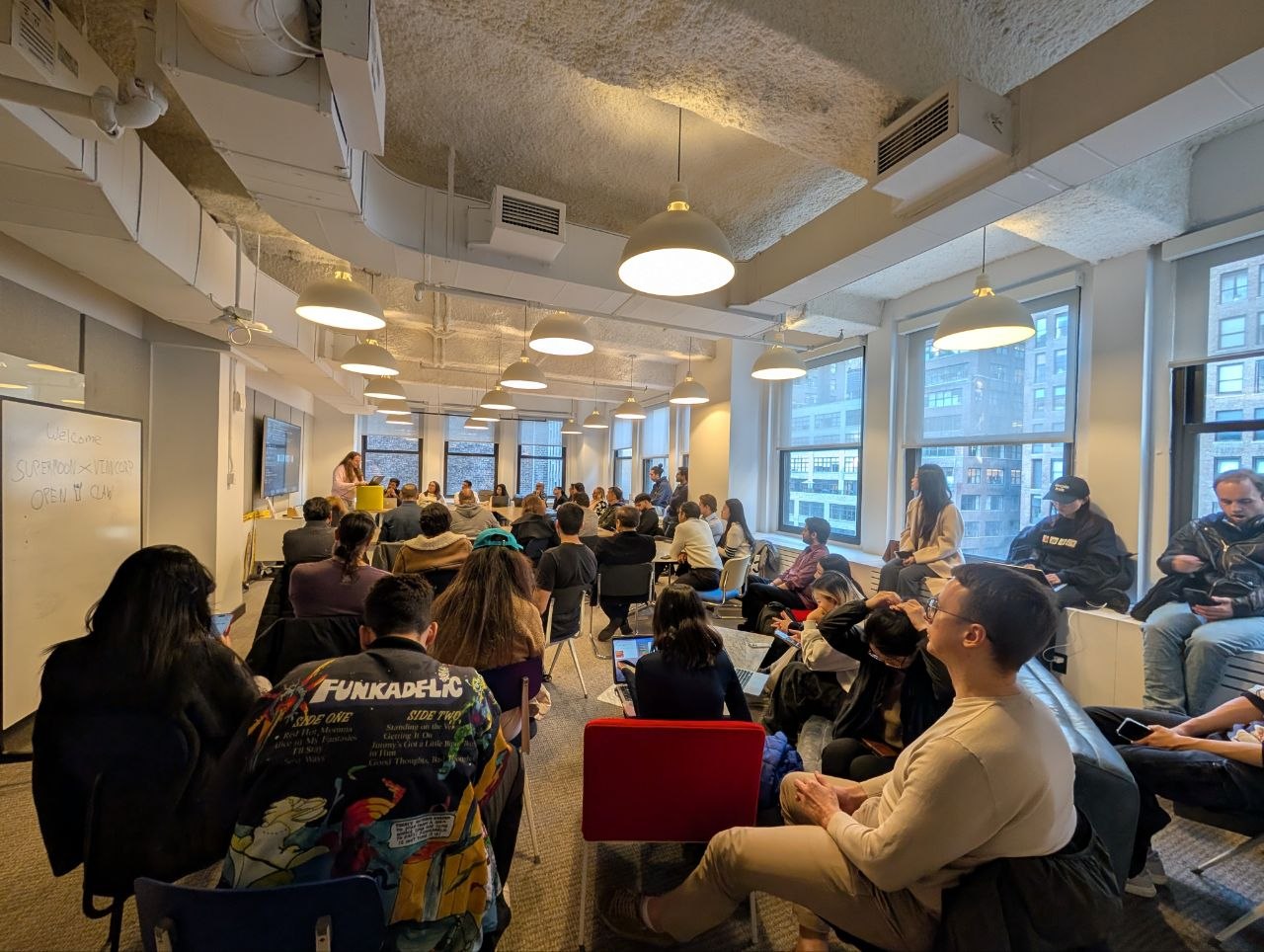
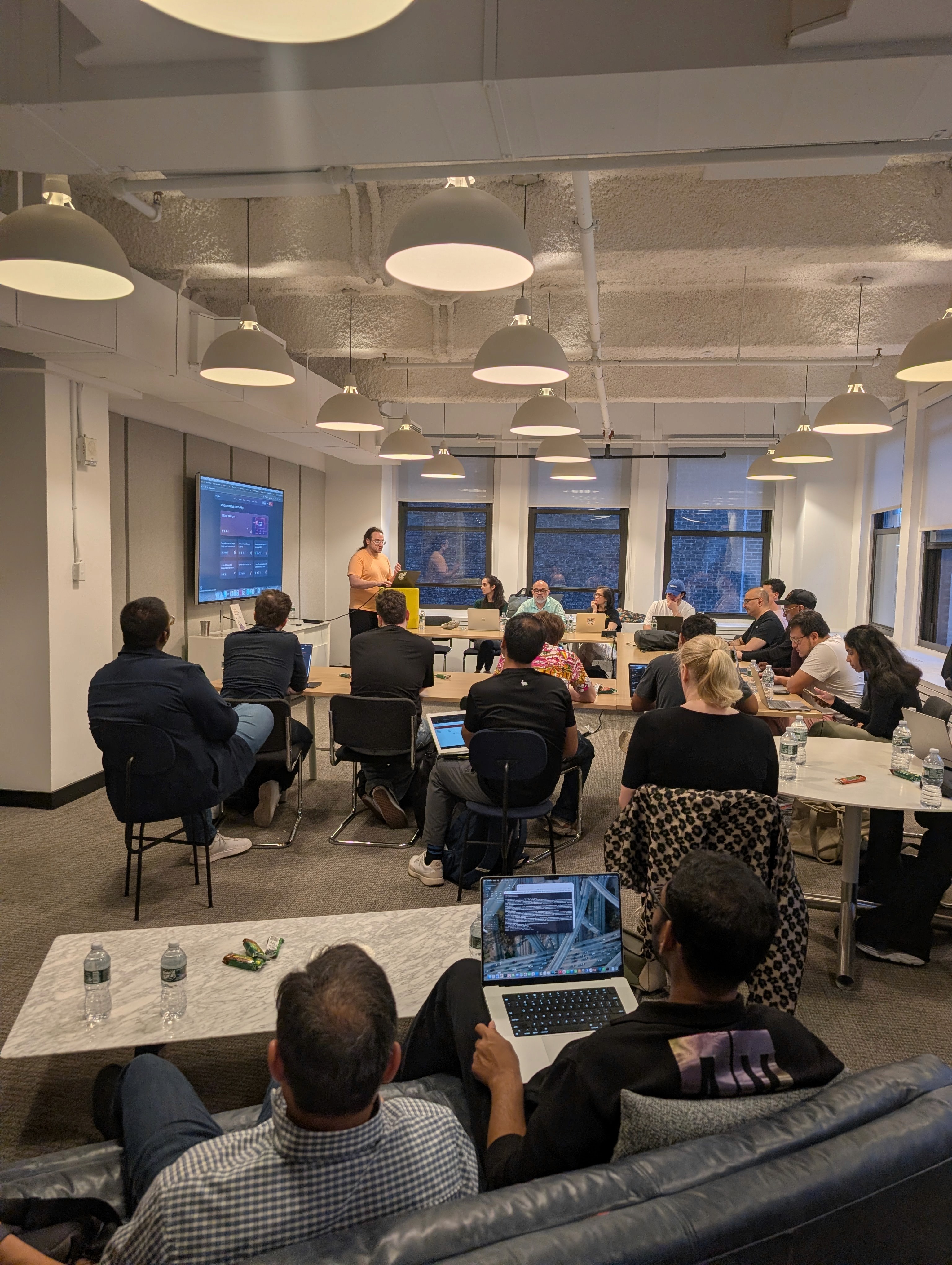
On April 15, we hosted Eric Manganaro at WeWork in New York. Eric covered OpenClaw installation and basics, then opened the floor and let the audience drive. Founders asked about their own startups, their own broken workflows, their own specific problems. Eric answered in real time, building live examples as the room guided the conversation. It was crowd work, not a lecture.
Eric made the core distinction early. "You can also ask ChatGPT what is the weather," he said. "But that is not an app. You cannot expose it to others." Most founders use AI the way they use Google. OpenClaw is different. You give it a natural language instruction and it creates something that runs on its own, hosted, automated, handling real tasks while you are somewhere else. Throughout the session, Eric showed this over and over as audience members pitched scenarios, translating plain English into functional tools in seconds.
The biggest reaction came when Eric talked about product-market fit. "That used to take six months. By the time you get there, you just lost your time, lost bunch of money, and you basically burn out." His point: OpenClaw compresses the early validation loop. Build, ship, get feedback, iterate. But he was careful to add what most AI evangelists skip. "People are sometimes saying that software engineering is not required. That's not true." AI does not replace engineers. It shrinks the window before you know if anyone wants what you are building.
Eric also addressed why AI-generated output feels so generic. "Make me a whole website at one shot, and it'll just make this long column of trash." His approach: work iteratively. Build small, combine into larger structures. OpenClaw learns your preferences over time, your brand, your taste. A single prompt to a generic tool does not know you.
The audience pushed on security and limits. Eric pointed to Trusted Execution Environments but was honest that it is still early. Eric did not oversell either. "If you don't own a process, you can't own it. If it doesn't have an API, it does not want you to use it."
The evening closed on something we keep coming back to in our community. OpenClaw is not a silver bullet. You still need humans with domain expertise and taste. The tool makes the iteration faster. That is the value. Not magic.
This was our second edition of the series, led by Eric Manganaro, with our team's Joanna Orlova, Christopher Micheal and Elena Obukhova, as well as Khurram Kalimi of Vinncorp, co-hosting.
There is a difference between asking AI a question and building something with it. Most founders are stuck on the first one. That was the opening line at our second OpenClaw for Startups workshop, and it set the tone for the entire evening.
On April 15, we hosted Eric Manganaro at WeWork in New York. Eric covered OpenClaw installation and basics, then opened the floor and let the audience drive. Founders asked about their own startups, their own broken workflows, their own specific problems. Eric answered in real time, building live examples as the room guided the conversation. It was crowd work, not a lecture.
Eric made the core distinction early. "You can also ask ChatGPT what is the weather," he said. "But that is not an app. You cannot expose it to others." Most founders use AI the way they use Google. OpenClaw is different. You give it a natural language instruction and it creates something that runs on its own, hosted, automated, handling real tasks while you are somewhere else. Throughout the session, Eric showed this over and over as audience members pitched scenarios, translating plain English into functional tools in seconds.
The biggest reaction came when Eric talked about product-market fit. "That used to take six months. By the time you get there, you just lost your time, lost bunch of money, and you basically burn out." His point: OpenClaw compresses the early validation loop. Build, ship, get feedback, iterate. But he was careful to add what most AI evangelists skip. "People are sometimes saying that software engineering is not required. That's not true." AI does not replace engineers. It shrinks the window before you know if anyone wants what you are building.
Eric also addressed why AI-generated output feels so generic. "Make me a whole website at one shot, and it'll just make this long column of trash." His approach: work iteratively. Build small, combine into larger structures. OpenClaw learns your preferences over time, your brand, your taste. A single prompt to a generic tool does not know you.
The audience pushed on security and limits. Eric pointed to Trusted Execution Environments but was honest that it is still early. Eric did not oversell either. "If you don't own a process, you can't own it. If it doesn't have an API, it does not want you to use it."
The evening closed on something we keep coming back to in our community. OpenClaw is not a silver bullet. You still need humans with domain expertise and taste. The tool makes the iteration faster. That is the value. Not magic.
This was our second edition of the series, led by Eric Manganaro, with our team's Joanna Orlova, Christopher Micheal and Elena Obukhova, as well as Khurram Kalimi of Vinncorp, co-hosting.
Related posts
Related posts
Related posts